
Largest developing nations still face challenges
School / University: DPS Rohini School
GH4/57 Paschim Vihar Paschim Vihar - Delhi - (India)
Mobile: 8510010084 , Landline: 91-11-45522885
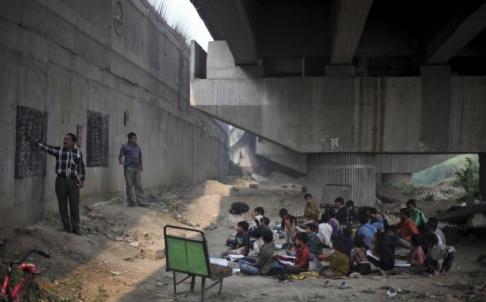
Largest developing nations still face challenges getting children to schoolDelegations from the world's nine most populous developing countries just met in New Delhi to discuss a subject vital for their countries' futures: education.The meeting of ministers and others from Bangladesh, Brazil, China, Egypt, India, Indonesia, Mexico, Nigeria and Pakistan, known as the E9, is the latest in a series of encounters held every two years to fulfil the pledge of "education for all" by 2015.The E9 account for 54 per cent of the world's population, 42.3 per cent of children not in school, 58 per cent of young illiterates (aged 15-24), and 67 per cent of adult illiterates (two-thirds of whom are women).The challenges are enormous: children, from families too poor to think about education, beyond the reach of schooling and too malnourished to study; and too few schools, classrooms, teaching resources, and adequately trained teachers. Rampant illiteracy underpins other problems, including exploding populations, gender imbalances and poverty.India provides a good example of how these problems should be addressed. A decade ago, 30 million Indian children were not in school; today, the figure is three million. A far-reaching Right to Education Act, obliges the state and central governments to provide eight years of free and compulsory education to all children between six and 14.This does not mean all enrolled students will emerge prepared for the information age; but getting children into school is a start. India also needs a relevant curriculum and skilled teachers who can motivate their students.Today, 540 million Indians are under 25. The labour force is expected to grow by 32 per cent over the next 20 years, whereas it will decline by 4 per cent in industrialised countries and by nearly 5 per cent in China. India's favourable demographic profile can add significantly to its economic-growth potential for the next three decades, provided that its young people are educated and trained properly.India has one of the largest higher-education systems in the world, and ranks second in terms of student enrolment. But, while the country now has 621 universities and 33,500 colleges, only a few are world-class institutions. But they are still islands in a sea of mediocrity.The need for education reform has never been clearer, and Prime Minister Manmohan Singh's government recognises this. Still, India's spends only 1.2 per cent of its gross domestic product on higher education, compared to 3.1 per cent in the US or, closer to home, 2.4 per cent in South Korea. The figure should be higher.Education is recognised as a national priority. The next 10 years could see a dramatic change in education in India. But it will require a huge effort.Shashi Tharoor is India's minister of state for human resource development. Copyright: Project SyndicateInformation gathered from Internet from Click Here